September 1, 2025
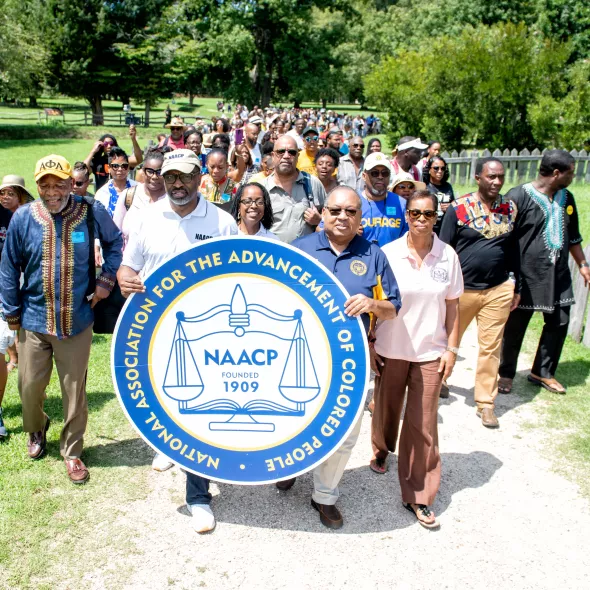
NAACP Headquarters
4805 Mt. Hope Drive
Baltimore, MD 21215
Attention President & CEO:
I must first of all tell you that I am not simply writing these letters to have something to say, but I have been commissioned by God himself to speak the mind of God to his people. God’s primary desire for his children is that they be saved, mature spiritually to become like Jesus Christ, live in harmony with Him and others, and experience spiritual well-being and joy. This includes showing love and mercy and focusing on eternal life rather than worldly pursuits.
Secondly, I would like to say that I was anointed to be a Seer Prophetess (Exodus 15:20 (Miriam); Judges 4:4 (Deborah); 1 Samuel 9:19; 2 Samuel 24:11 (Gad). Seer Prophetess comes from the Hebrew word ra’ah, meaning “to see (with the eyes of the heart; those are the spiritual eyes)”. They perceive the invisible spiritual realm, often receiving revelations through vivid dreams, visions, and mental images as well as God’s audible voice. A heightened sense of spiritual and emotional sensitivity, picking up on the atmosphere of a place or discerning the unspoken emotions and motives of others. Multiple sensory perceptions. With the ability to perceive hidden information, they offer navigational insight, wisdom, and counsel for people and leaders. These gifts and anointing are for redemptive purposes. When a problem is revealed, it is through prayer or action that a solution will be brought about.
The Lord has commissioned me to point America and the world to the devastating effects that have been brought on society, and therefore the world, because of the unjust and oftentimes cruel method of the Criminal Justice System’s mediation of retribution for the wrongs committed. The world does not realize that no matter who is in charge, the laws of right and wrong still apply, and all must give an account of their deeds, including America and the Criminal Justice System. Because we have a higher court that governs our actions, which is the court of heaven, we cannot simply carry out our self-made rules and procedures. The rules and laws of this country are supposed to be equal and just to all of its citizens. We have “sown to the wind and are now reaping to the whirlwind” (Hosea 8:7).
Unfortunately, we have heard the reports and seen evidence of individuals who have been involved in the system. Furthermore, we have witnessed the destruction of families and communities by the criminal justice system’s failure to deliver just and fair outcomes for those who have gone through the system. The gross failure and injustice have exacerbated existing inequalities and societal problems.
First, the system is basically punitive, and prisons function as a warehouse for people that society doesn’t want to deal with. Moreover, it has been reported that incarcerated people across the world consistently experience poor health across a wide range of mental illnesses and physical conditions. Below are some of the issues that involve the failure of the Criminal Justice System.
Mental illness is exacerbated because of the inability to handle the high rates of mental illness among inmates. Overcrowding, isolation, and a stressful environment cause existing conditions or cause new psychological trauma.
- “Criminal College effect: instead of reforming individuals, some of the penal environments place them in proximity with experienced criminals. This only led to those individuals leaning more towards criminal behavior, which came to be called “Con college.”
- Death by suicide was most common. Stressors that contributed to that death include mental illness struggles, the death of a loved one, planned transfer to a different institution, deportation risk, lack of family support, and sex offender status. Suicide in jails also increased greatly from one year to another.
- Reportedly, about 2 million times a year, people with serious mental illness are booked into jails. Nearly 20 to 5 was reported to have a history of mental illness (37% in state and federal prisons and 44% held in local jails.
- Cycle of recidivism: without effective rehabilitation, many individuals re-offend and return to prison. This creates a debilitating cycle of incarceration and release, which hinders their ability to build a stable life.
- Because the devastating effects of the system extend far beyond the time served. Their criminal conviction can create permanent barriers to housing, employment, education, and civic participation, which make it extremely difficult to reintegrate into society.
- Because of the disproportionate impact, the system’s failure and devastating effects are most acutely felt by people of color, those with mental illness, and those struggling with poverty. They are the ones who are disproportionately represented in the incarcerated population.
At-risk diseases in jail
- HIV/AIDS. Prison rape in the United States and sexually transmitted infections…
- Hepatitis C. While the majority of HCV infections occur outside of prison, the infection is still widespread within the prison system as a result of injection drug use.
- Tuberculosis…
- Covid-19.
The data includes members of the prison population globally and has a range of complex and often overlapping physical and mental health conditions, including:
- 11.4% had depression, as compared to 6-8% in the general population
- 9.8% had PTSD and 3.7% had psychotic disorders (also at least double the rate in the general population).
- Nearly one in four (23.8%) had an alcohol use disorder, and 38.9% had a drug use disorder on entry to prison.
- 17% had Hepatitis C, with prevalence of Hepatitis B, HIV, and tuberculosis in excess of the community-based population, and significant rates of sexually transmitted infections (including gonorrhea, chlamydia, and syphilis). Paper published in the Lancet Public Health Journal; major studies in prison health, Professor Seena Fazel, senior author, and Professor of Forensic Psychiatry at the University of Oxford. Centers for Disease Control and Prevention (CDC); Federal Bureau of Prisons (BOP).
Because I have had the opportunity to be an eyewitness to how inmates are treated in jails and prisons, I know the majority of alleged reports are true. It was during the doctoral internships that I had the privilege of working at the Dixon Correctional Center in St. Charles, as well as the jails in Rockford, Illinois, and Freeport, Illinois. I sat on the 15th Judicial Circuit Juvenile Counsel for some time and was the Director of the Diversion Program for first-time offenders here in Freeport, Illinois, during that time.
I would add that with my experience of working in the system, as well as witnessing my own son Karlos M. Evans’ involvement in the system, I can attest that once they are involved in the system, they are never the same (alcoholism, anxiety, depression, low self-esteem, issues dealing with frustration etc.). From the time they are carted off to prison, they are reportedly taken out and beaten within an inch of their lives before they even arrive at Statesville Correctional Center. 60435, to begin the term of imprisonment. There was also terrible abuse and beatings by several police officers at one time, during incarceration in jail, while handcuffed and feet shackled, and the FBI had to be brought in.
During their terms in prison, they are malnourished, devalued, placed in isolation, and, worst, subjected to abuse simply because of the prejudiced officers who are in charge of them. Some of the inmates are sexually abused by officers and other prisoners, while the officers reportedly witness it. I would mention that there were reports of drugs being brought into prison for the inmates by the officers. There is so much prejudice and cruelty that many times, some of these people take their own lives or are killed during imprisonment.
These individuals are also mistreated by the officers who work in the local Jails. The officers seem to feel that it is their duty to punish the inmates themselves. They reportedly initiate physical violence among the incarcerated. They withhold food, they use tasers on the inmates at will, not realizing that the tasers can cause heart attacks and death.
This occurs because the Criminal Justice System is controlled by many biased and prejudiced people who have severe personal issues with anger, drugs, alcohol, and racism. Most importantly, racism and discrimination are displayed by those who are in charge of the facilitation of the Criminal Justice System, which is the Judiciary branch, law enforcement, and the Department of Corrections; therefore, there is often very little justice carried out.
First, we look at the Judiciary is made up of the courts –Supreme, Circuit, the magistrate (local), and municipal (city) courts. The Judicial branch interprets the laws. The injustice and inequality in Illinois’s judiciary are manifested through systemic bias, socioeconomic status, and political influence, which leads to disproportionate outcomes for marginalized communities.
Next, we will look at Law enforcement, the police, which is the department of people who enforce the laws, investigate crimes, and make arrests. Injustice and abuse by these police, including excessive force, racial bias, false arrests, and the failure of officers to intervene against misconduct by their colleagues, have resulted in so many unnecessary and cruel deaths.
Reportedly, there was an attempt to implement reforms, such as the SAFE-T Act of 2021. The statistics that are allegedly reported and witnessed demonstrate that it continues to disproportionately harm and affect minority communities, particularly seen in large cities like Chicago and other urban areas. These include police in all jails and prisons, and street officers in local communities.
Lastly, we look at the Department of Corrections, which refers to the retribution, rehabilitation, and supervision of criminal offenders through the system of incarceration, probation, and parole. The injustice and inequalities in Illinois’ Department of Corrections are evident through severe racial disparities, overcrowding, harsh sentences, and poor jail and prison conditions, particularly for Black and Hispanic individuals.
People of color are disproportionately represented in jails and prisons compared to their share of the population; they receive longer sentences and face over-policing and negative interactions with law enforcement, which appear to be designed to keep them in the system. The state prisons are so overcrowded that rehabilitative services are limited, if at all, which only contributes to a higher risk of violence and poor conditions for all incarcerated individuals.
We know without a shadow of a doubt that the Criminal Justice System is “broken” and unless issues are immediately and increasingly improved, the purpose of the Criminal Justice System will be of “no consequence.”
It has become another form of institutional slavery. It is unjust and another method of one man suppressing and misusing another. Unless there is a way to see every human being as just as important and meaningful as another, failure will continue and get even worse. As long as one man has the so-called upper hand over the other, there will be jealousy, envy, and dangerous competition. Until man’s hearts are changed by our creator, there will continue to be chaos and upheaval among each other.
However, there is a way to make meaningful changes, and that is through creating restorative outcomes, where judges, prosecutors, and public defenders prioritize empathy, holistic approaches, and collaborative communication. These qualities are the foundation of a restorative justice framework, which focuses on seeing the White, Black, or Asian person as a human being and then repairing harm to relationships caused by crimes, rather than relying solely on punitive measures.
The judges who preside over restorative court models and problem-solving courts should emphasize rehabilitation and healing over race, economic background, and punishment. The judge should work closely with attorneys, social workers, clinicians, and community partners to address the unique circumstances of each case.
They should maintain a courtroom tone that is respectful and empathetic. They use clear language to ensure comprehension and conduct individualized check-ins. They should be knowledgeable about the impacts of trauma, substance abuse, and mental health conditions on participants. They should always stay abreast of evidence-based practices and emerging research to continuously improve court outcomes.
The prosecutors who are progressive should be moving beyond the “tough on crime” mentality to embrace methods that promote community safety and address the root causes of crime. They should be willing to see restorative justice as a genuine alternative to traditional prosecution, even in serious crimes, and refer appropriate cases to programs like community conferencing or Victim-offender mediation.
They should be willing to engage with victims to understand their needs and what justice looks like for them, moving beyond merely securing a conviction. They should define community safety broadly by working with community leaders to identify ways to hold people accountable to build strong, healthy communities.
They should look for ways to offer alternatives to incarceration, such as rehabilitative programming for non-violent offenses, and use wisdom and discretion when giving a person another opportunity to try again (with consideration of mental health issues and physical issues, education, poverty, etc.).
The Public Defender, in a restorative system, should practice holistic defense and address a client’s legal and social needs to improve long-term outcomes. They should provide legal support while also referring clients to essential services, including mental health counseling, substance use treatment, and housing assistance.
They should work to build trust with their clients and empower them to make decisions and address the underlying issues that may have contributed to their legal troubles. They should understand the high prevalence of trauma among justice-involved individuals and use this knowledge to inform their advocacy.
The public defender should work in partnership with community organizations to connect clients with the support they need to address the root cause of crime.
The major reason for bringing this to the forefront is that creating a restorative justice system with professionals working in this capacity will produce multiple benefits for the clients, the system, and society as a whole.
This method will reap a productive harvest of holistic models and will reduce both the likelihood and length of incarceration. These restorative programs will give victims a voice in the process and can lead to higher satisfaction rates. When people are held accountable in a rehabilitative and supportive environment, research has shown lower recidivism compared to purely punitive approaches. Furthermore, holistic defense has been shown to reduce taxpayer costs associated with inmate housing.
When the criminal justice system uses the restorative method, it looks at the root cause, such as poverty, lack of education, mental health problems, or substance abuse. Through rehabilitation, they offer services like mental health counseling, drug treatment, and vocational training to address these root causes.
The Criminal justice system focuses on repairing the harm caused by the crime and can include mediation between the victim and the offenders. This process can foster empathy and accountability and reduce recidivism rates compared to traditional methods. When the criminal justice system is designed properly, it can break cycles of crime and help individuals reintegrate successfully into society.
There are evidence-based programs that target specific risk factors, criminal behavior, and reinforce positive behaviors, and have been shown to reduce recidivism. The Federal Bureau of Prisons reportedly offers job training through its prison industries, and research shows that participants are less likely to re-offend. Notably, countries like Norway focus on “resocialization” rather than punishment. They provide humane living conditions, education, and counseling. It has been reported that this method has led to the world’s lowest recidivism rates.
There is no absolute way to guarantee that everyone will be receptive to this restorative method, but there is one thing for sure, and that is that when we use methods that are fair and just for everyone, we can be assured that God (Micah 6:8) will be pleased because we are trying to follow a method that closely aligns with biblical principles and focuses on repairing harm (Matthew 5: 23-24), healing relationships, and restoring individuals to a state of wholeness. It also reflects the gospel message of forgiveness, reconciliation, and redemption. This will most assuredly bring about change in those who are participants and in the lives of the ones who are in charge of facilitating this method, and will ensure an outcome that will have a great impact on mankind and the whole of society.
Recommendations:
- Individual prisons for different categories do not place all of the inmates in one place because it is most likely they will adapt to the ways of the other inmates and become worse than before. You are not familiar with spiritual things; evil can pass from one person to another.
- There must be a Religious Chaplain in all prisons. The presence of the living God is critical to dealing with the evil that is housed in those prisons and jails.
- When Jesus rose from the grave, he rose with all power Matthew 28: 18,19 and He put all things under his feet (Ephesians 1:22 and I Corinthians 15: 27 which refers to God’s act of giving Jesus complete authority and sovereignty over all creation.
- God’s authority over all creation is the only authority that can destroy evil, not jails or prisons, or threats or punishments.
- For we all must appear before the ‘Judgment Seat of Christ’, so that each of us may receive what is due us for the things done while in the body, whether good or bad” 2 Corinthians 5:10.
- I tell you these things that you might understand the gravity or the criticalness of my mission to this generation and the world, and that the Lord has commissioned me to let the world know that a day of ‘Reckoning is coming’.
Yours respectfully,
The Lord’s Servant, Seer Prophetess Dr. Dorothy L. Muse